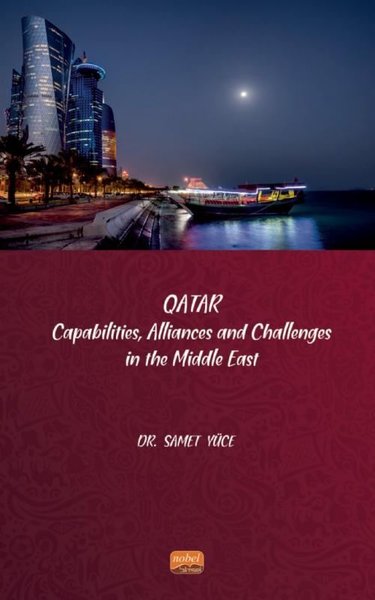
This study mainly focuses on the regional dynamics of the Middle East and Qatar's political behaviours after the Arab Spring from a theoretical perspective. With the strategic and political decisions especially during Emir Hamad bin Khalifa, Qatar sought to extend its influence in regional and international politics. The Arab Spring opened a wider window for the Qatari leadership to leverage Qatar's political position and achieve political ambitions. They managed to pursue an effective foreign policy towards the regional challenges in the Middle East, where the Arab Spring created a ripple effect. In other words, the Qatari leadership consolidated Qatar's strength through alliance building and proactive and independent policies towards the post-2010 regional challenges. Consequently, Qatar emerged as an influential player in the regional and international arena after the Arab Spring. On the other hand, the KSA-led camp perceived the Muslim Brotherhood (MB) and its affiliates and/or their increasing political weight in the region as a direct threat to the regional stability and the survival of their regimes. They backed the interferences/counterrevolutions against the MB-attached governments in the region. Likewise, they largely desired to counterbalance Qatar's prominent rise in the region through the embargoes/blockades respectively in 2014 and 2017. Qatar stood up against the challenges through its capabilities and alliances and concurrently, preserved its position in the unfolding regional order of the Middle East.
(Tanıtım Bülteninden)
This study mainly focuses on the regional dynamics of the Middle East and Qatar's political behaviours after the Arab Spring from a theoretical perspective. With the strategic and political decisions especially during Emir Hamad bin Khalifa, Qatar sought to extend its influence in regional and international politics. The Arab Spring opened a wider window for the Qatari leadership to leverage Qatar's political position and achieve political ambitions. They managed to pursue an effective foreign policy towards the regional challenges in the Middle East, where the Arab Spring created a ripple effect. In other words, the Qatari leadership consolidated Qatar's strength through alliance building and proactive and independent policies towards the post-2010 regional challenges. Consequently, Qatar emerged as an influential player in the regional and international arena after the Arab Spring. On the other hand, the KSA-led camp perceived the Muslim Brotherhood (MB) and its affiliates and/or their increasing political weight in the region as a direct threat to the regional stability and the survival of their regimes. They backed the interferences/counterrevolutions against the MB-attached governments in the region. Likewise, they largely desired to counterbalance Qatar's prominent rise in the region through the embargoes/blockades respectively in 2014 and 2017. Qatar stood up against the challenges through its capabilities and alliances and concurrently, preserved its position in the unfolding regional order of the Middle East.
(Tanıtım Bülteninden)
| Taksit Sayısı | Taksit tutarı | Genel Toplam |
|---|---|---|
| Tek Çekim | 267,96 | 267,96 |
-
%30İNDİRİM378,00TL 264,60TL

-
%23İNDİRİM230,00TL 177,10TL
-
%23İNDİRİM280,00TL 215,60TL
-
%23İNDİRİM380,00TL 292,60TL
-
%23İNDİRİM280,00TL 215,60TL
-
%23İNDİRİM350,00TL 269,50TL
-
%23İNDİRİM500,00TL 385,00TL
-
%23İNDİRİM350,00TL 269,50TL
-
%23İNDİRİM700,00TL 539,00TL
-
%23İNDİRİM300,00TL 231,00TL
-
%23İNDİRİM600,00TL 462,00TL